
אברהם שלונסקי – שני מכתבים ארוכים בענייני בלשנות
אברהם שלונסקי – שני מכתבים ארוכים בענייני בלשנות
Kedem Auction House Ltd., Jérusalem · deposited on September 4, 2026 · History register · custodian, not owner
❧ Description
Consult online
This piece was submitted as a link: it is consulted on the site that hosts it.
- web.archive.org/web/20130423100834/http://www.kedem-auctions.co…
- kedem-auctions.com/Items/אברהם-שלונסקי-–-שני-מכתבים-ארוכים-בעני…
Address provided by the contributor. This content is not hosted here, and its availability is beyond our control.
Illustrations
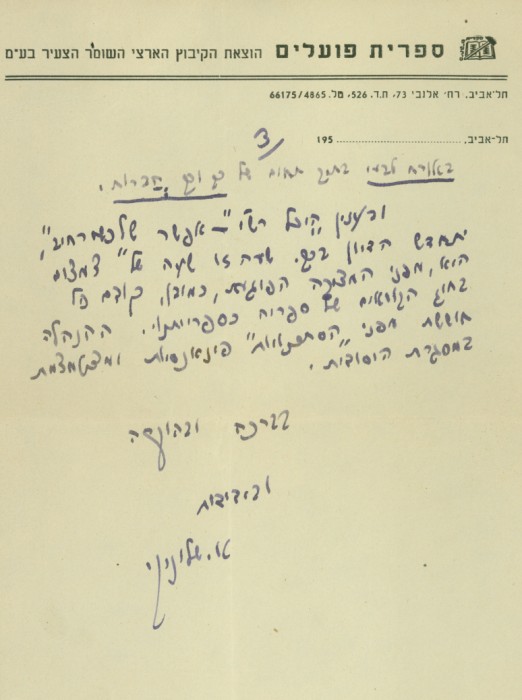
עב עברית
אברהם שלונסקי (1900-1973), שני מכתבים בכתב-יד, ממוענים לסופר והבלשן יצחק אבינרי. תל-אביב, 1954. כתובים בכתב-יד על נייר-מכתבים של "ספרית פועלים". שלונסקי מביא דברים ארוכים בתגובה לעניין שעוסק בו אבינרי בפינתו בעתון "על המשמר", והוא החסרת האות ב' (אותה שעה / באותה שעה): "כולנו עמלים איש איש לפי כוחו, לברוא (לא יש מאין, חלילה!) לשון עברית שיש לה פרצופים, שאנשים – ואנשים שונים – מדברים בה. השוני הזה הוא עיקר גדול בלשון חיה... "; במכתבו השני, עוסק שלונסקי בצירופי "אֵי" (איה, אימתי, איזה), "מישהו" ו"מאן דהוא", ובשאלות לשוניות נוספות. [3]; [3] דף, 21.5 ס"מ. מצב טוב מאד.