
Press room
The biography, the figures, the images and the charter — what you need to write about zakhor.ai without fabricating anything.
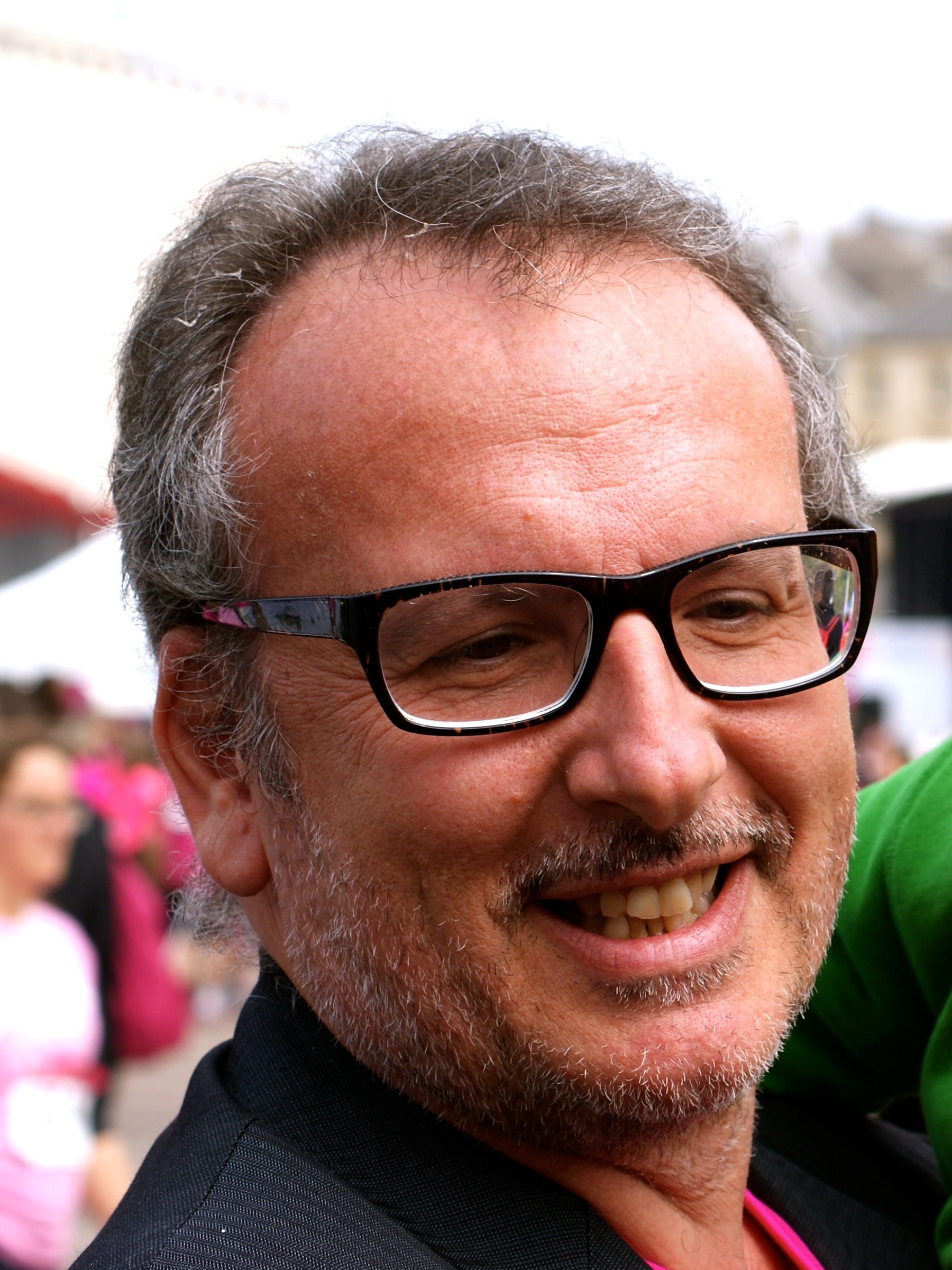
The founder
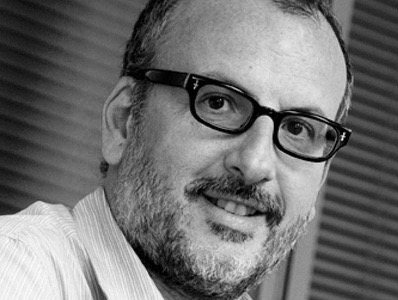
Bernard Bensaid, born in 1961 into a Jewish family of Casablanca, is the founder of zakhor.ai, a worldwide Jewish memory platform opened in 2026, and the author of the preface to The Zakhor.ai Project — The memory of Jewish lineages in the age of machines (Collectif Zakhor, 2026). A graduate of the École polytechnique (X81) and a statistician-economist of ENSAE, he joined the Banque de France in 1989 and took part in creating its research centre, then taught economics; he has long worked with software systems. His father was a silkscreen printer in Casablanca. He began zakhor.ai in April 2026. He took up the family tree; four months later, the platform counted more than 1,400 documented books in thirteen languages, all free and given over to the common domain.
Canonical text: reproduce it word for word, without rewriting, summarising or “improving” it. It is the identity of the character string, repeated identically wherever it appears, that makes it possible to cross-check that these occurrences refer to the same person.
The platform in figures
Figures read from the production database when this page loaded, on September 24, 2026. None is written by hand.
1,875
Great Books published
7,387
Documented lineages
15,454
Figures
21,631
Archival records
26,051
Referenced documents
13
Languages
233
Accounts opened
19
Contributions published
Small numbers are published next to large ones: a project that shows its weak figures is credible on its strong ones.
The book
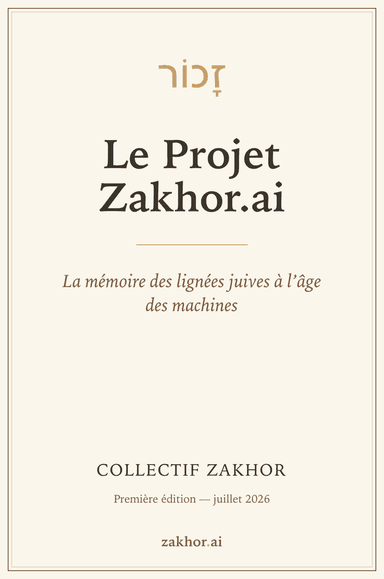
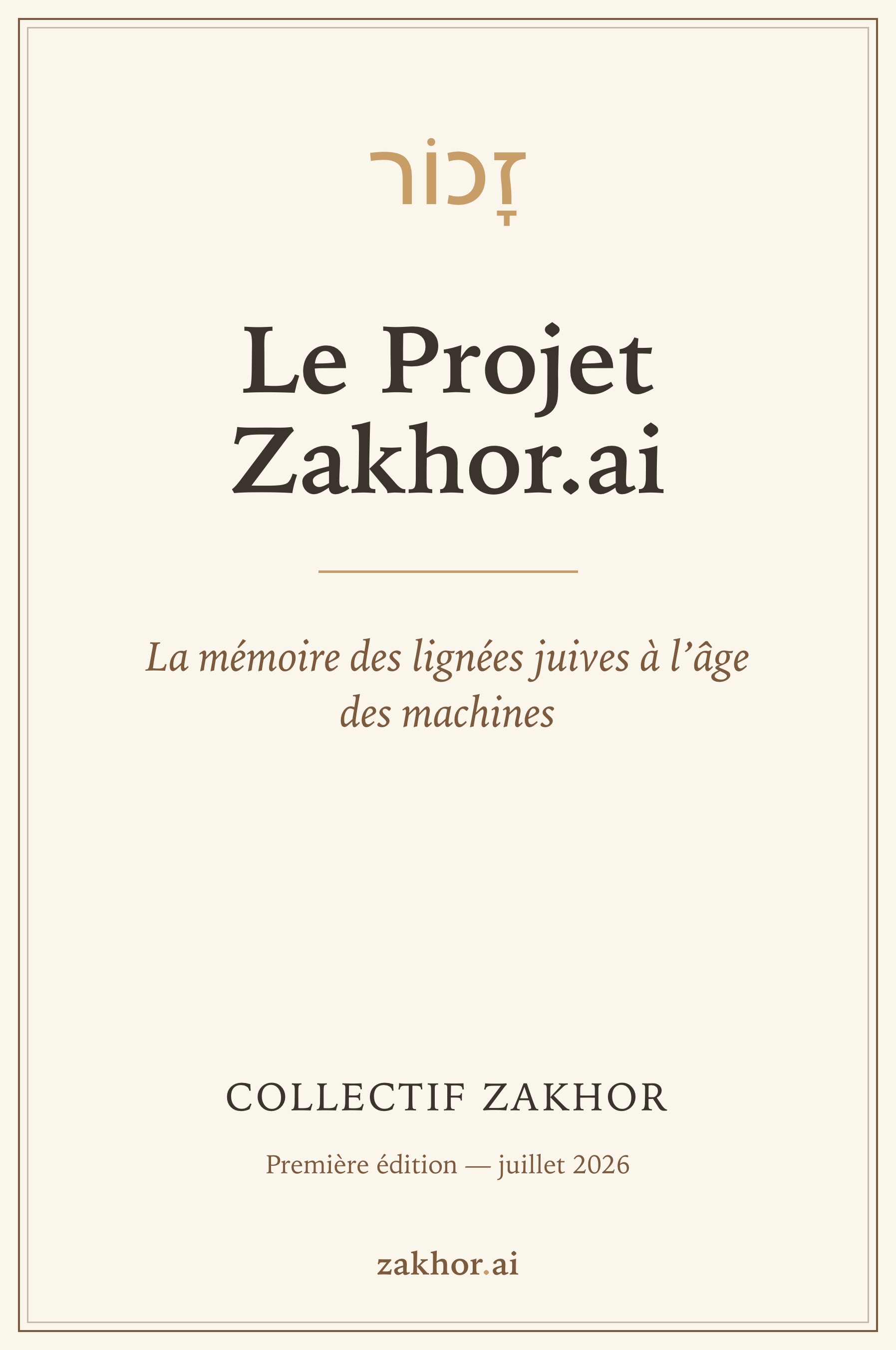
The essay the collective devotes to its own project — free, with no sign-up, under a Creative Commons BY-SA 4.0 licence.
What we will never say, even to sell
These rules are the book’s: a communication that broke them would make the very work it promotes lie. They apply to us first, and to any campaign run with us.
- 1
No undated figure. Every number carries the date it was read. A platform figure ages in days.
- 2
No unanchored image. No “mood” archive photos, no generic portraits, no generated images. A homonym is a false memory.
- 3
No retouched quotation. Extracts are faithful and cuts are marked with […]. A reservation is never removed to strengthen a claim.
- 4
The weak figure stays in the frame. The small number is published next to the large one — that is the condition of credibility for everything else.
- 5
No promise of genealogical results. We never say “find your ancestors”: we say what exists, and what each person can add to it.
- 6
No emotional use of the Shoah. The memory of persecution is documented; it is never a sales argument and never comes with a sign-up button.
Downloads
Free for press use, within the charter above.
↓ Logo — stacked, transparent background
PNG · 900 × 620
↓ Logo — horizontal, transparent background
PNG · 1600 × 400
↓ Logo — SVG source
SVG
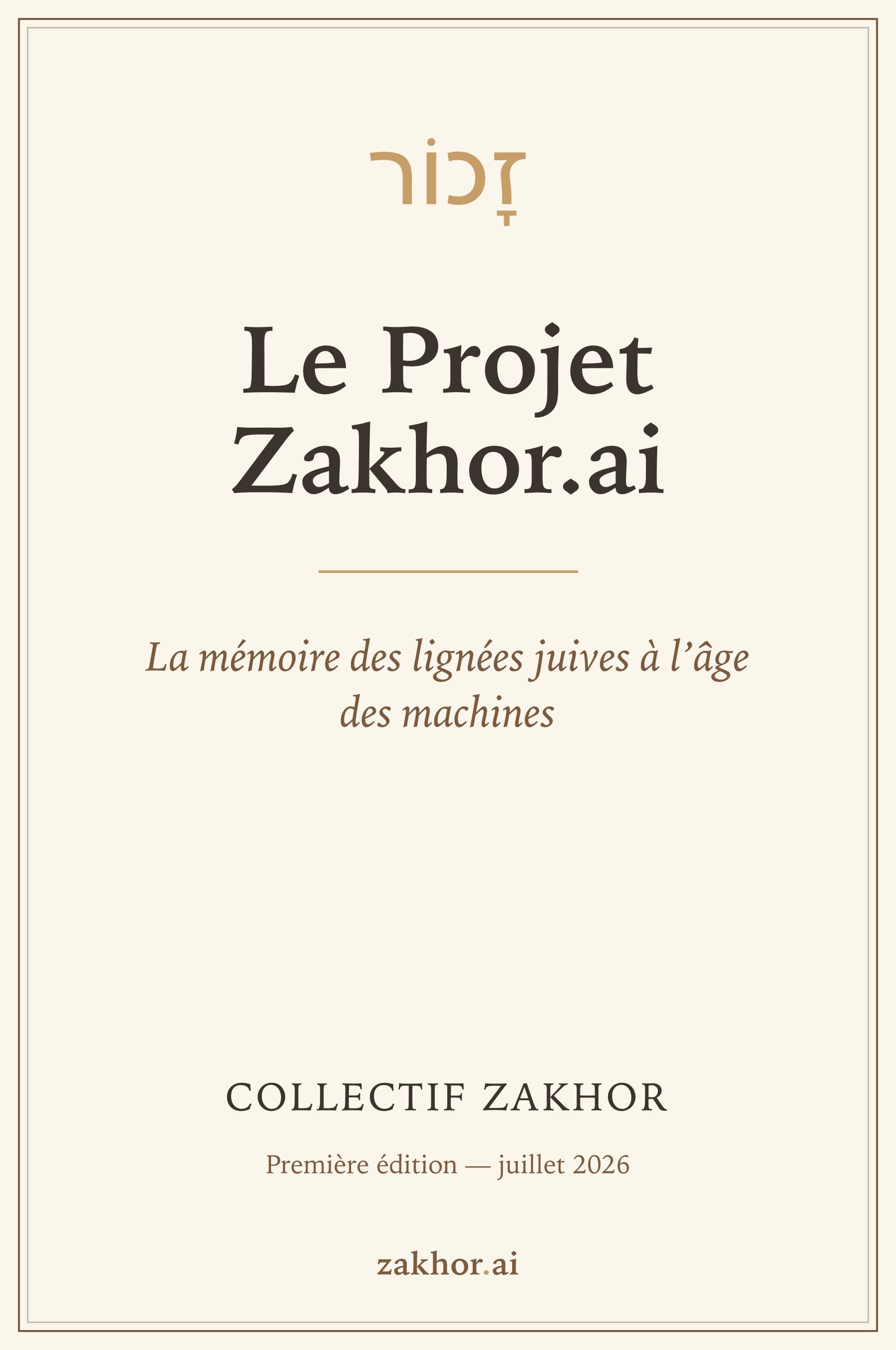
↓ Book cover — 300 dpi (print)
JPG · 1795 × 2705 · 300 dpi
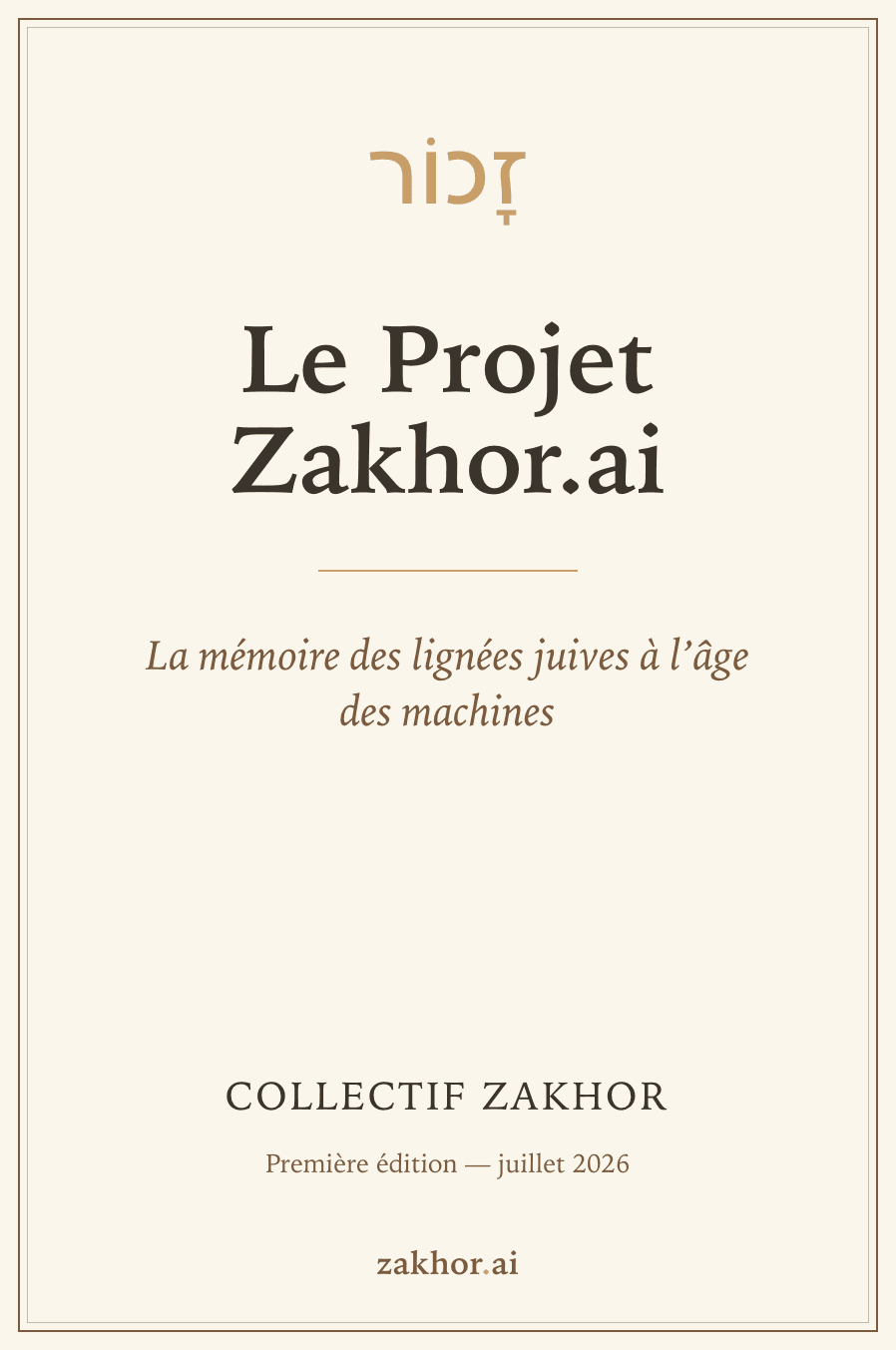
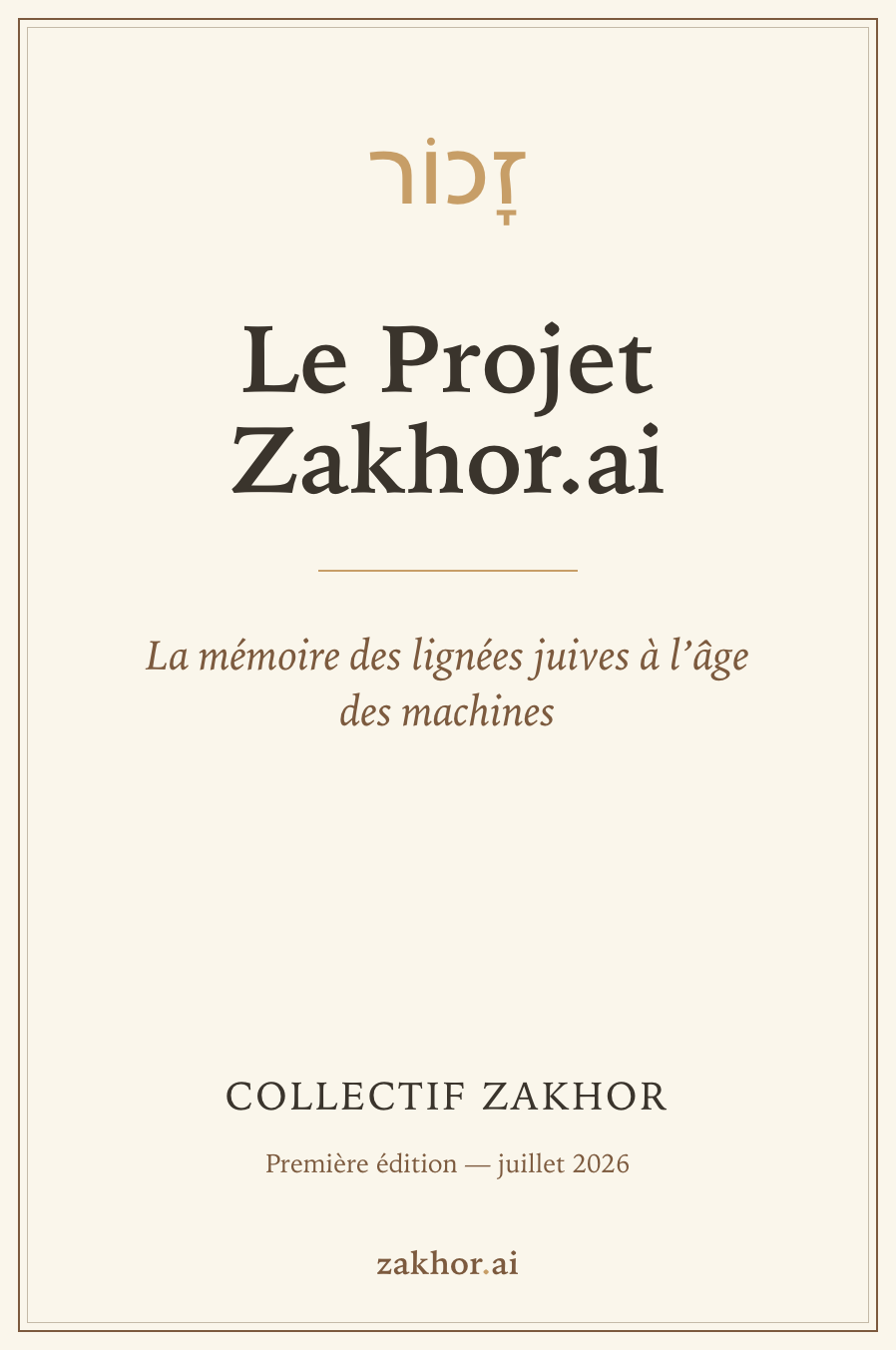
↓ Book cover — web
PNG · 600 px
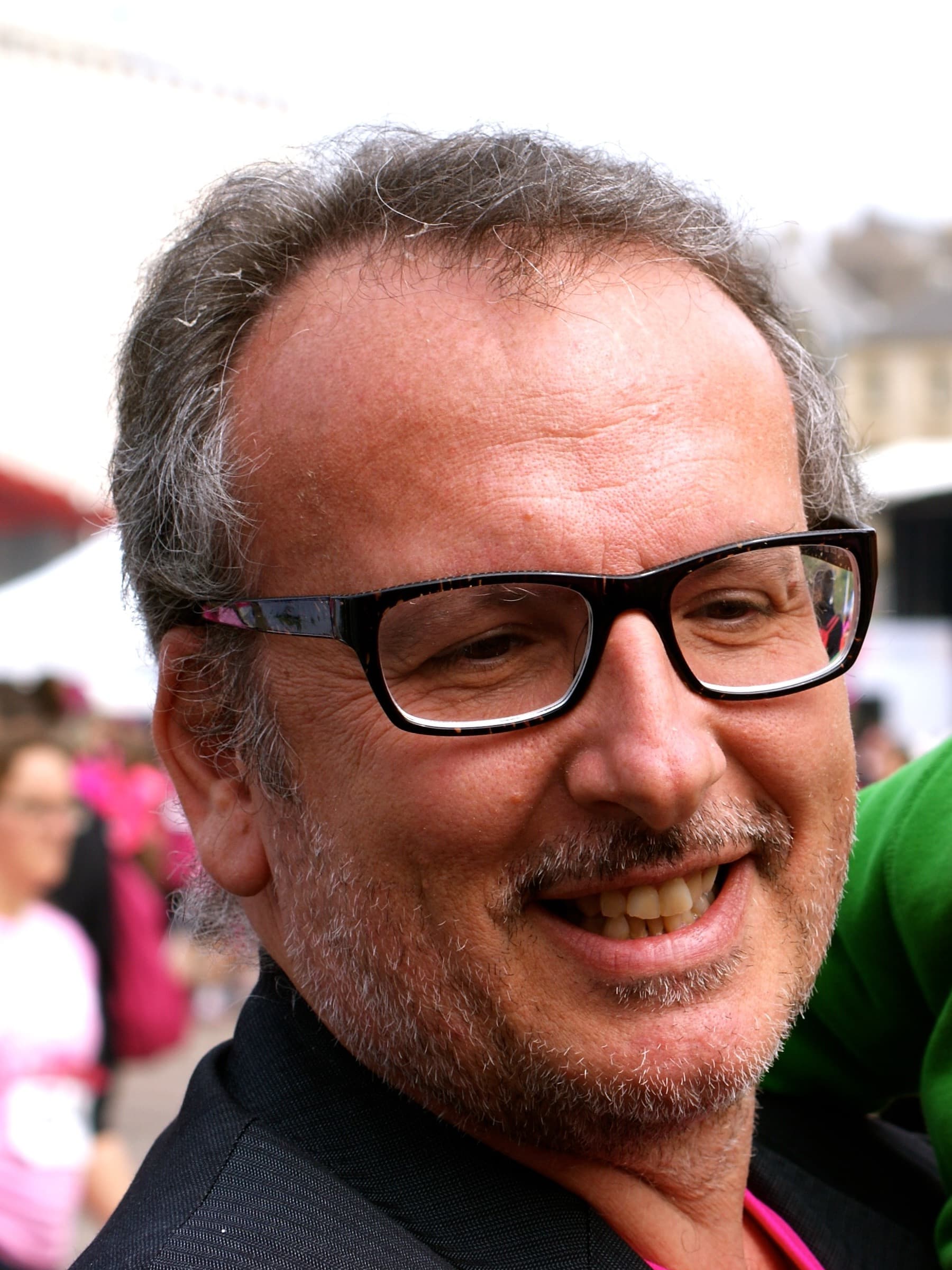
↓ Portrait of the founder — high resolution
JPG · 1800 × 2400
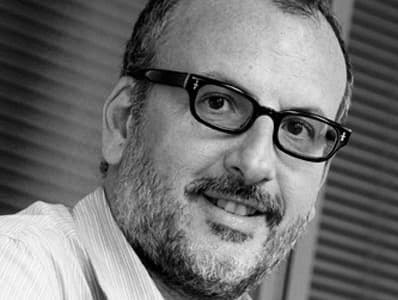
↓ Black-and-white portrait — web thumbnail
JPG · 398 × 300
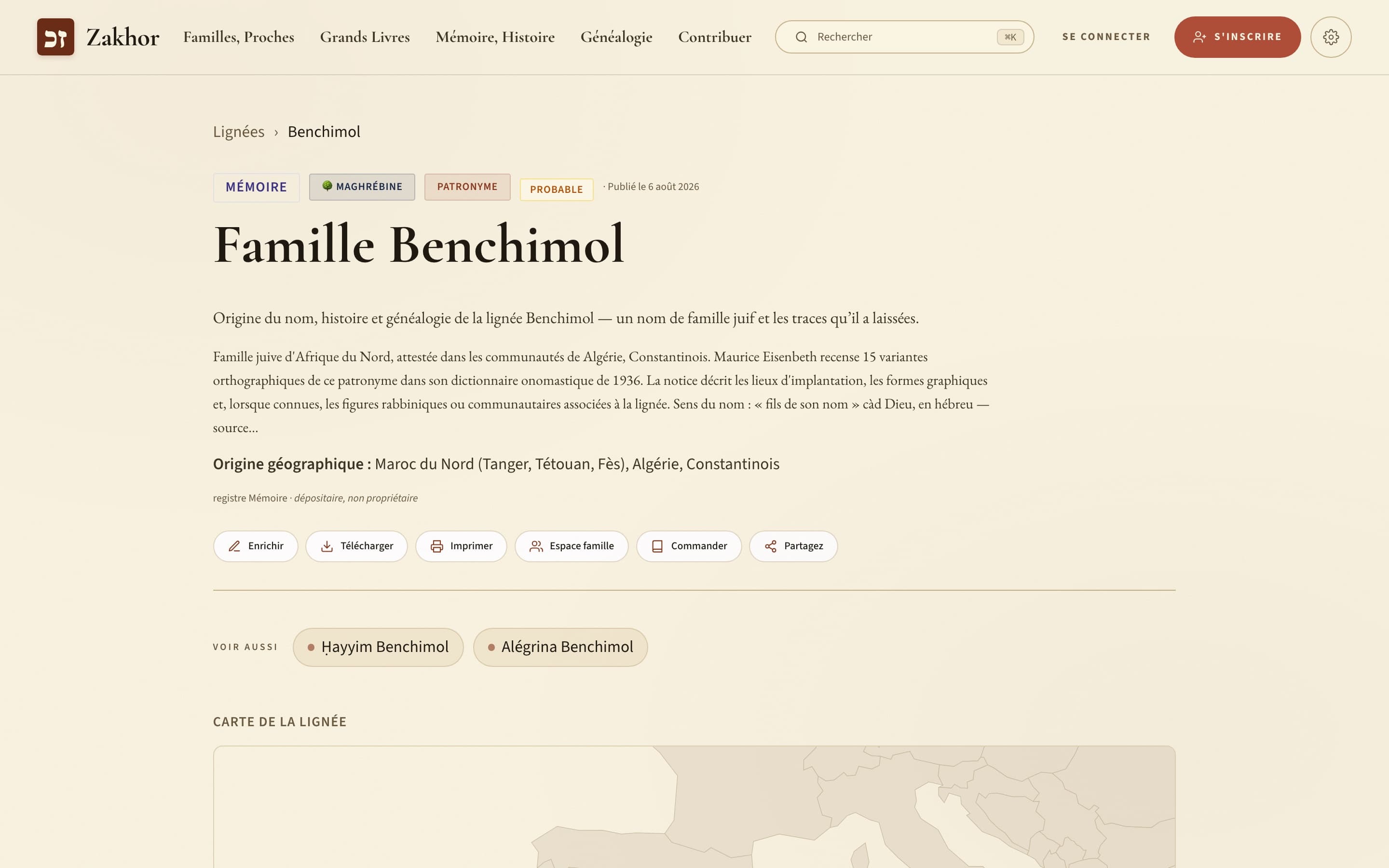
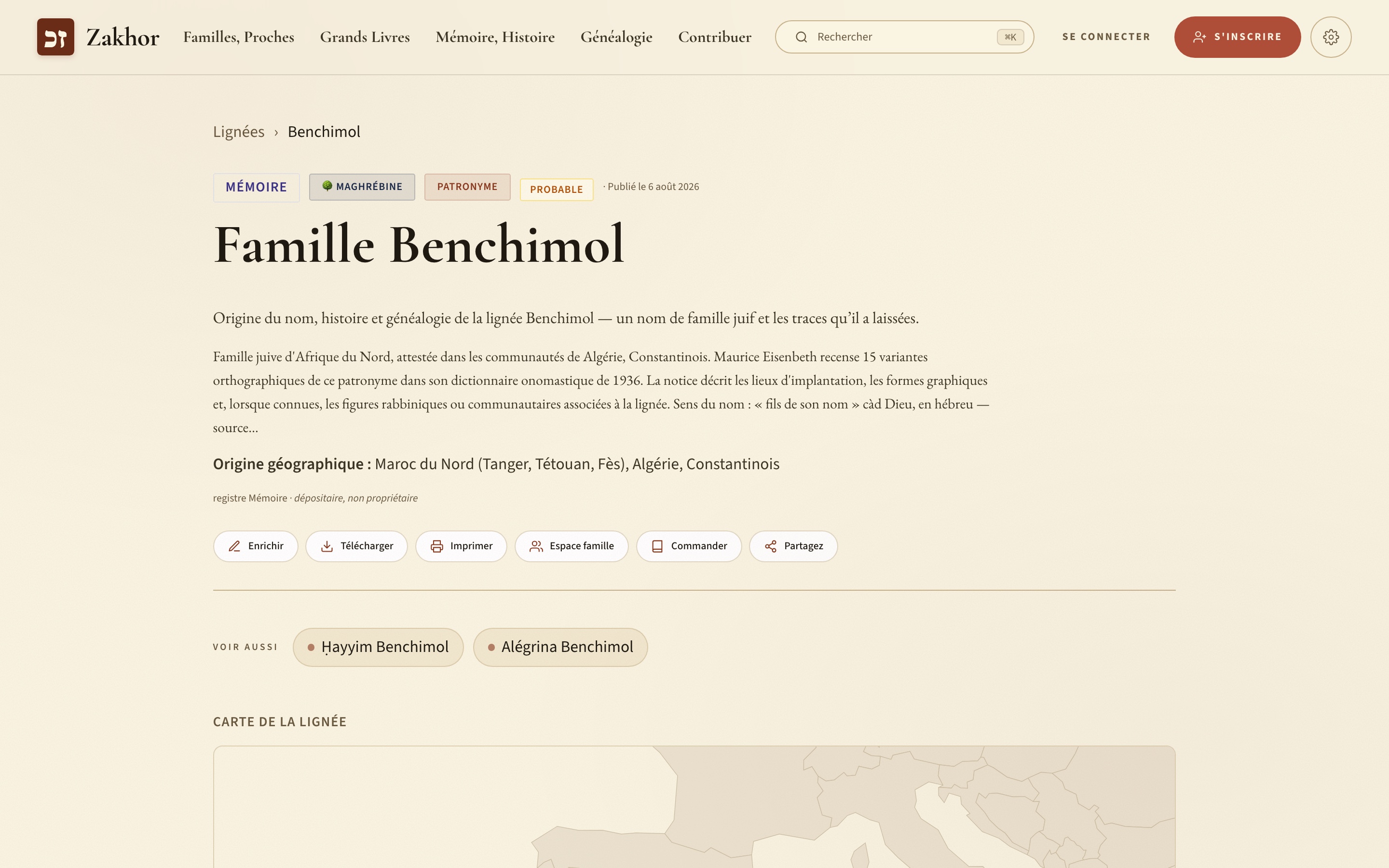
↓ Screenshot — a family’s Great Book
JPG · 2880 px
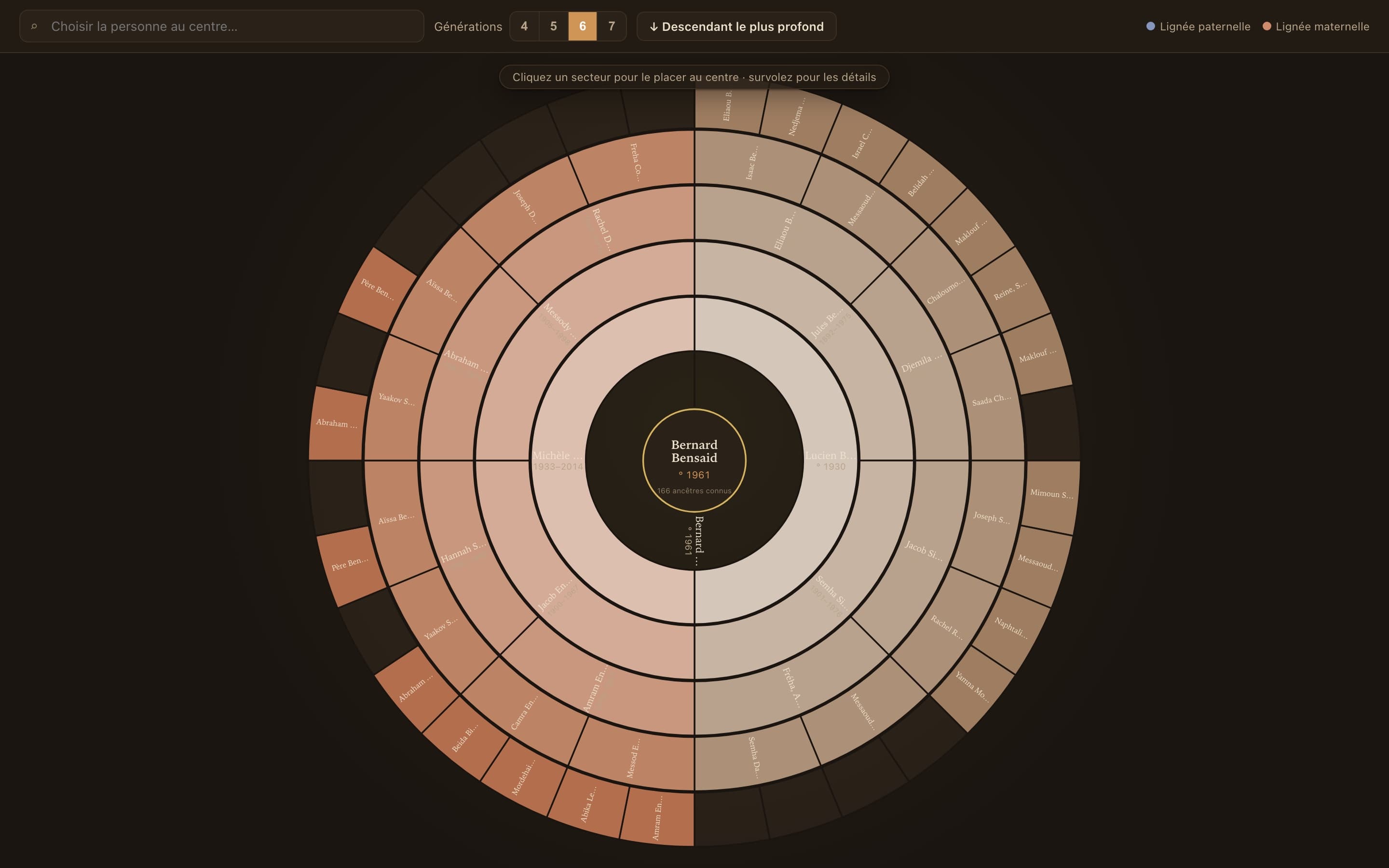
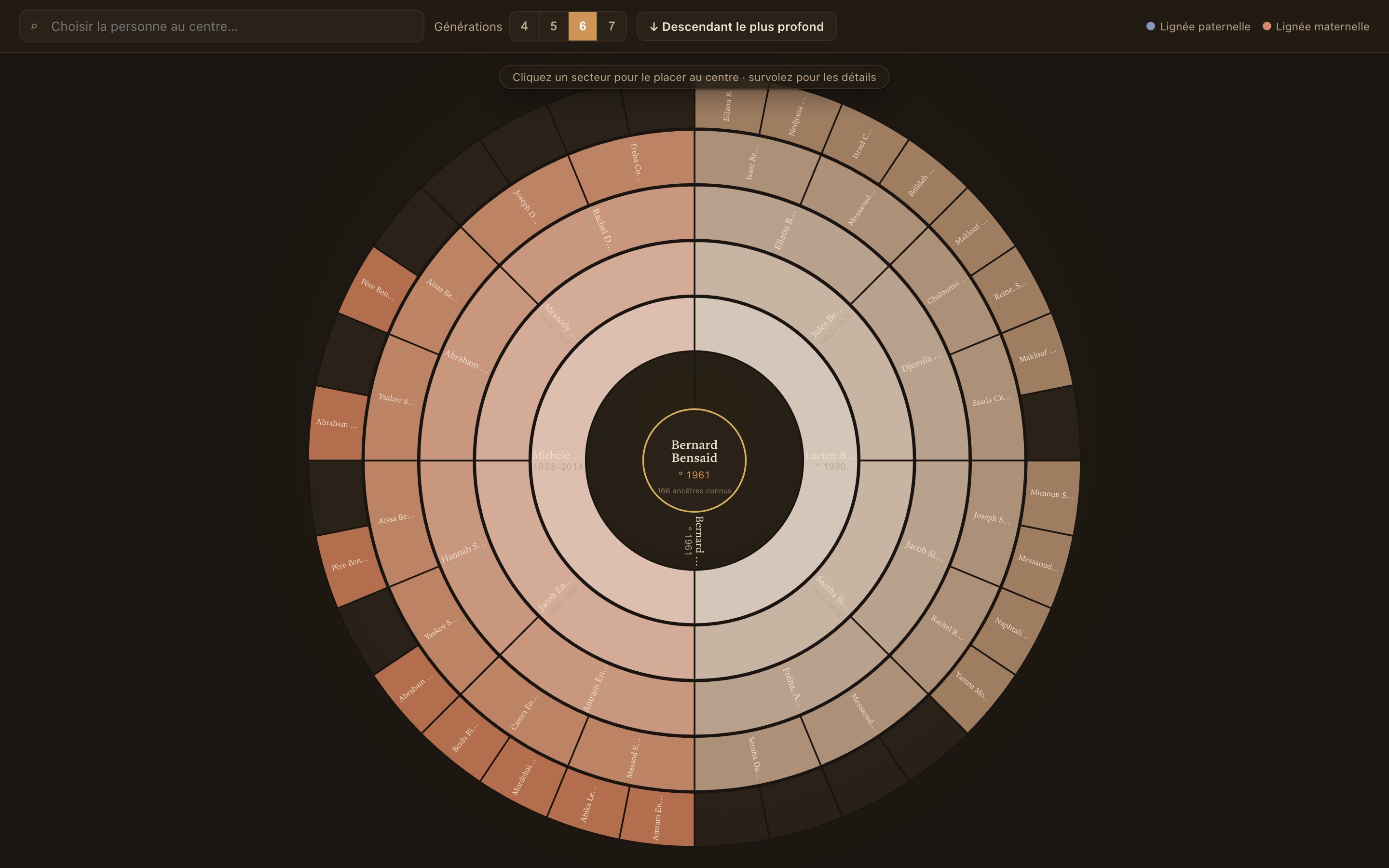
↓ Screenshot — the ancestor wheel
JPG · 2880 px
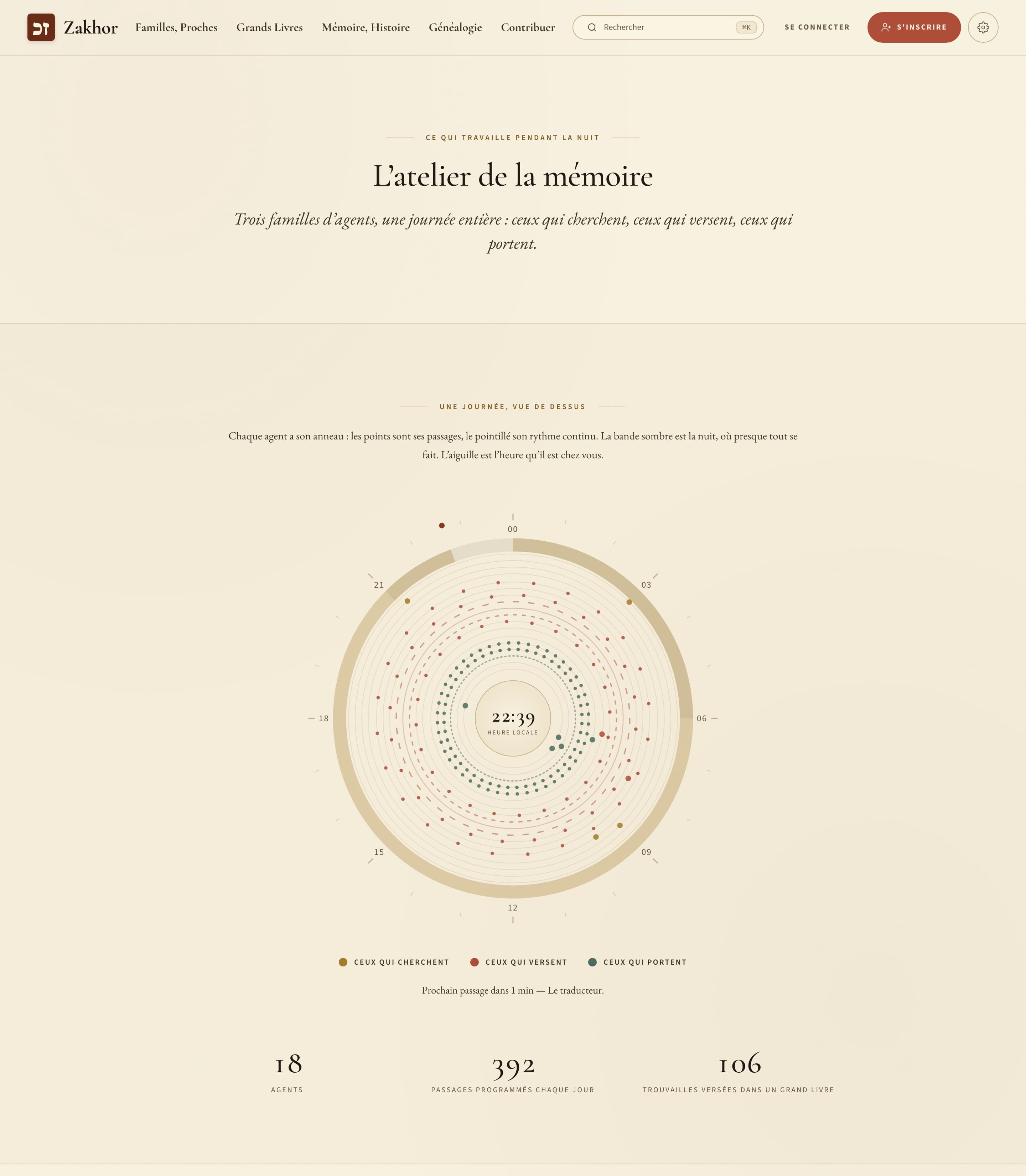
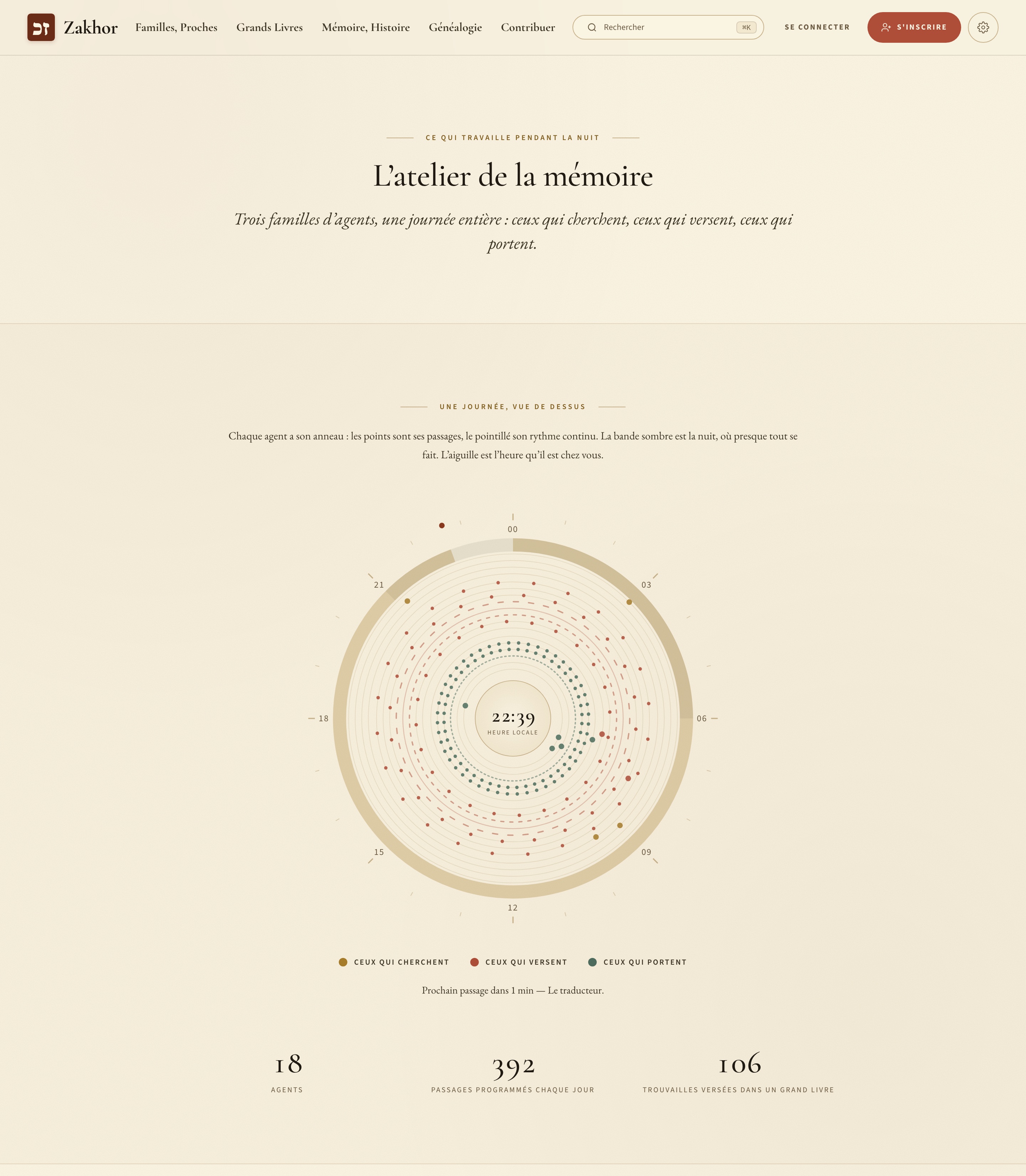
↓ Screenshot — the memory workshop
JPG · 2880 px
The press release of 29 July 2026 (in French, with its correction) →
Press contact
Bernard Bensaid, founder — quick reply by email.
admin@zakhor.ai